
The first bottle
Šipon 55
A single-vineyard white from Kog, in Prlekija. Five hundred and fifty-five bottles, made for a fifty-fifth birthday.
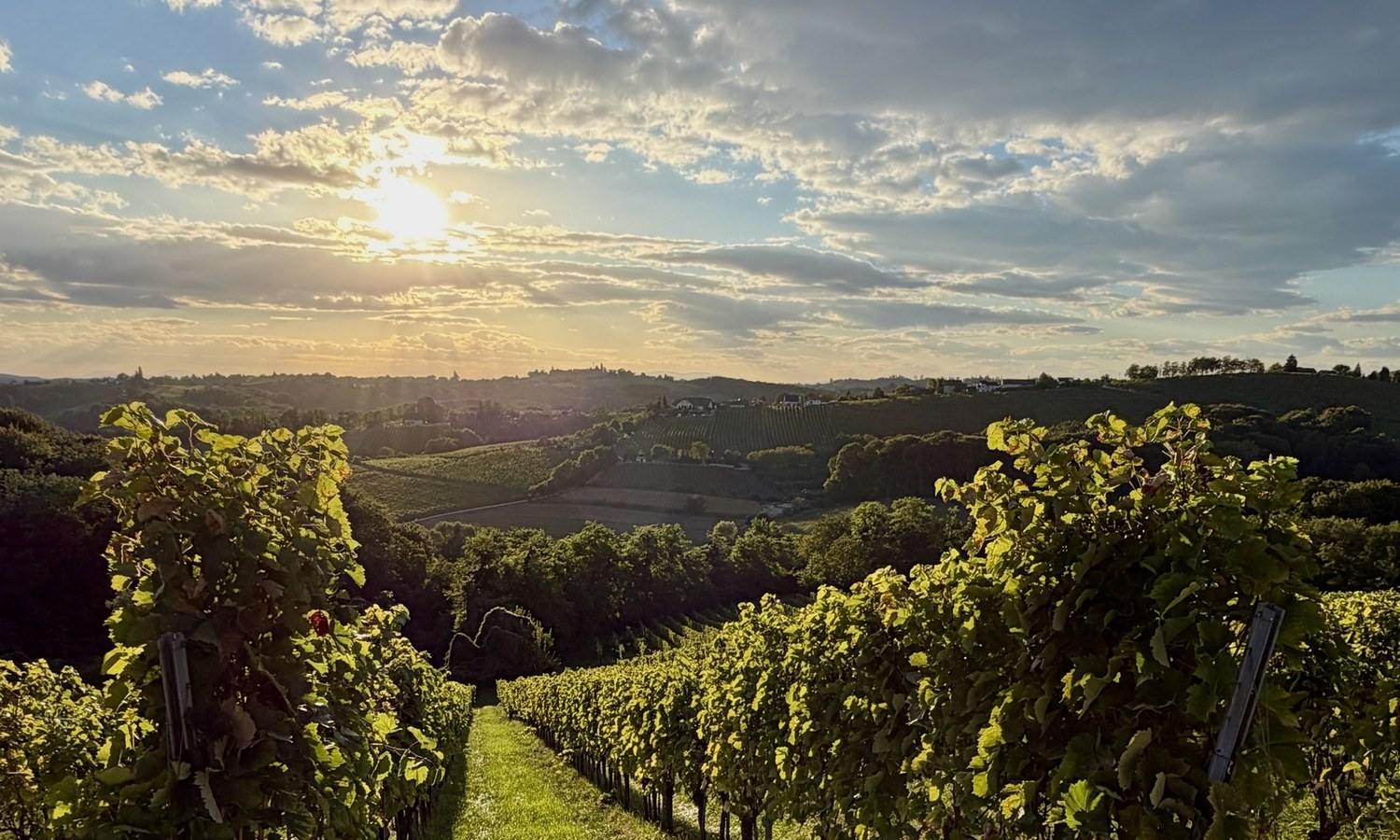
The place
One hill, one vineyard
Šipon 55 comes from a single vineyard at Kog, in Prlekija, the far north-east corner of Slovenia, hard against the Croatian border, where Šipon is the grape that belongs.
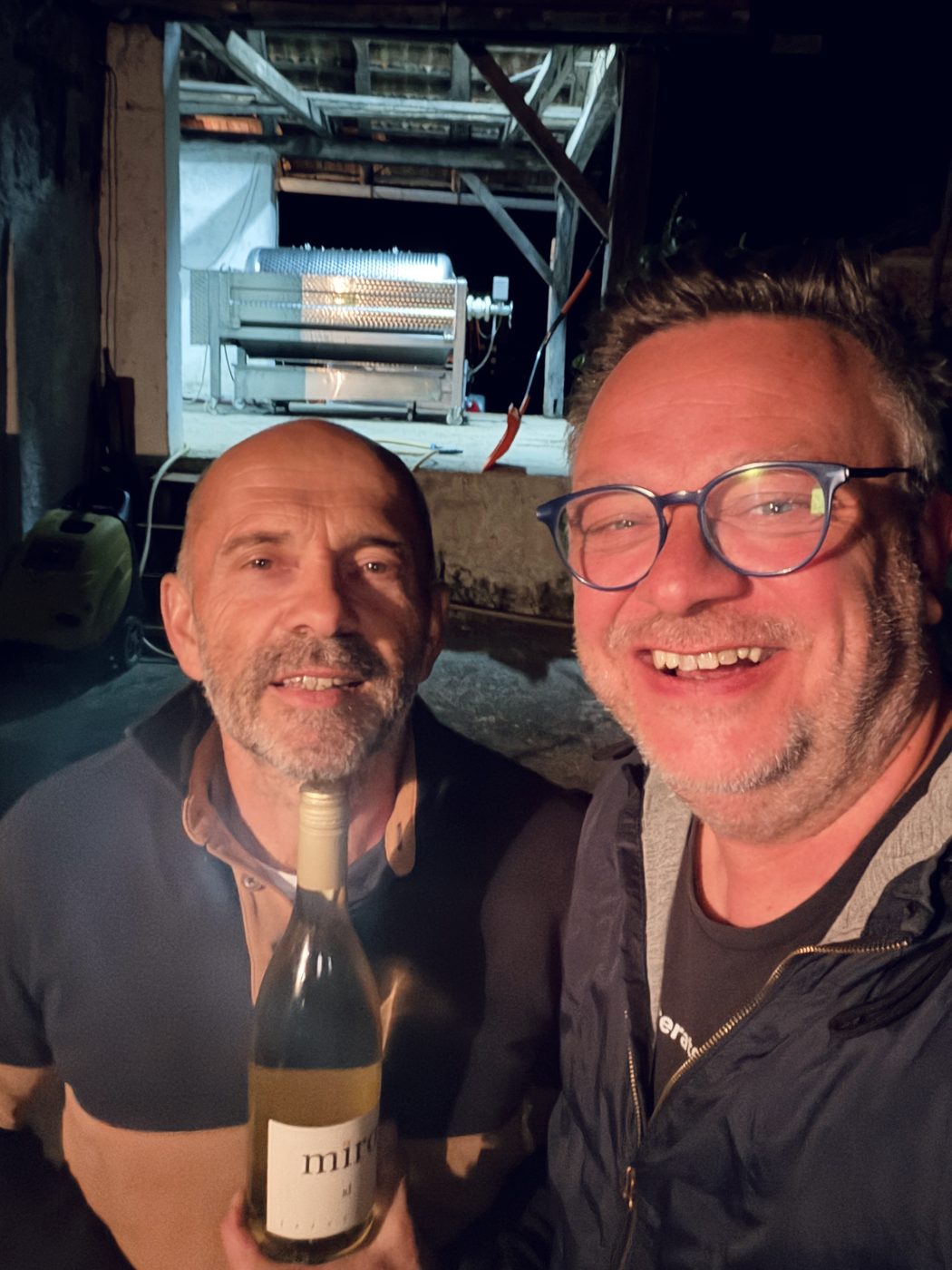
Sašo’s maternal grandfather and grandmother grew up about twenty kilometres from these rows. He has wanted to make his own wine for most of his life. This is it, and it starts where his family started.
Šipon is the local grape name for Furmint.
The grape
Ninety-eight degrees Oechsle
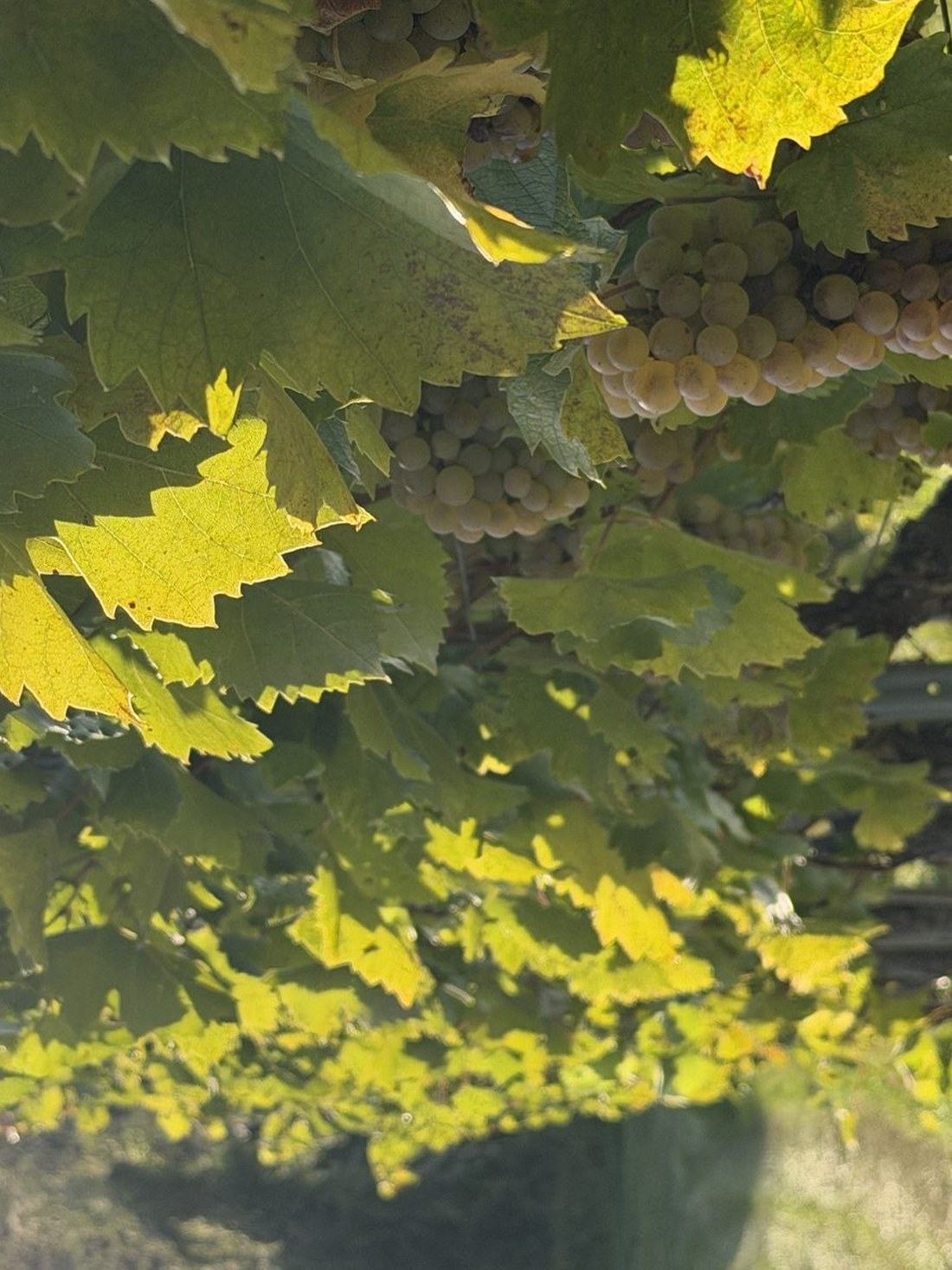
Šipon is the great white grape of eastern Slovenia: late-ripening Furmint by another name, and the variety that defines the hills of Prlekija and Podravje. It needs a long, warm autumn to finish, which is why it is picked late and why the wines can carry both freshness and weight. For this corner of the country, it is the grape that matters most.
The grapes came in very, very ripe: 98 °Oe. Oechsle measures the sugar in the must, and 98 is high, enough for a finished wine somewhere around 13 to 13.5% alcohol.
Ripeness is a decision, not an accident. Picking this late is a choice to make a wine with weight and texture rather than a light, early, sharp one.
In the cellar
Five hours on the skins, then two paths
After five hours of maceration, the fruit splits in two. From there, nothing is pushed.
One part goes into a single 300-litre oak barrel: twenty-five years old, rebuilt, gently toasted. It ferments on its own wild yeast, then stays at least five months on its lees. The other part ferments spontaneously in stainless steel, where the fruit stays bright and direct.
Malolactic fermentation, if it comes, is meant to come on its own too. After about five months, the two halves are blended back together. That blend is Šipon 55.
-
On the skins. -
Into the press, by the bucket. -
Filling the barrel.
For the more informed
The numbers
- Grape
- Šipon (Furmint), single variety
- Vineyard
- Single vineyard at Kog, Prlekija, Slovenia
- Must weight
- 98 °Oe
- Alcohol
- 13 to 13.5% expected
- Maceration
- 5 hours on the skins
- Fermentation
- Spontaneous. One 300 L oak barrel (25 years old, rebuilt, gentle toast) and a portion in stainless steel
- Malolactic
- Spontaneous, hoped for
- Ageing
- At least 5 months on the lees in wood
- Blending
- The two parts blended after about 5 months
- Production
- 555 bottles, limited edition
Fifty-five years, five hours, five months, five hundred and fifty-five bottles. Some of that is arithmetic. Some of it isn’t.
Now
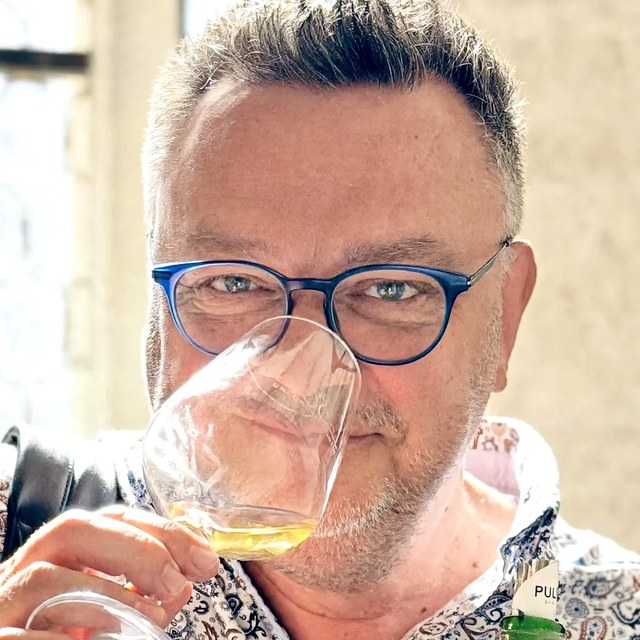
Immensely grateful for this gift to myself. And I’ll share it with the greatest pleasure. Now nature just has to do its part.
-
14:55 Crushed. Maceration starts.
19:55 Pressed. Moved to oak barrel and stainless steel.
-
No signs of fermentation. All quiet and sweet.
-
Morning Šipon still resting, gathering energy. No ferment start yet.
Early afternoon First signs of slow fermentation starting, after a quiet couple of days.
-
Fermentation underway. Active foam and CO₂ on the surface (both vessels confirmed started).
Active foam on the surface, 27 September. (photo: Liam Cabot - Roka winery) -
Both vessels fermenting. Barrel further along (red apple peel, clearing, ~95 °Oe). Stainless slower and sweeter (pear, ripe apple).
-
Barrel -
Airlock -
In the barrel -
Sample -
Into the glass -
In the glass
-
-
Both still fermenting nicely. The refractometer reads barrel 91 °Oe and stainless 93 °Oe (both started at 98 at press), so the barrel remains a little ahead.
-
Refractometer: barrel 86 °Oe, stainless 89 °Oe. Both vessels fermenting; barrel still ahead of the tank.
-
Refractometer: barrel 82 °Oe, stainless 80 °Oe. Both vessels fermenting.
-
Refractometer: barrel 72 °Oe, stainless 70 °Oe. Both fermenting briskly.
-
Refractometer: barrel 64 °Oe, stainless 62 °Oe. Everything is healthy: nice smell, great taste, and developing really nicely.
From the tank, 8 October. -
Refractometer: barrel 57 °Oe, stainless 57 °Oe. Both fermenting steadily.
-
Refractometer: barrel 52 °Oe, stainless 54 °Oe. Both fermenting steadily.
-
Refractometer: barrel 49 °Oe, stainless 49 °Oe. Both fermenting steadily.
-
Refractometer: barrel 44 °Oe, stainless 42 °Oe. Both still fermenting.
-
Refractometer: barrel 41 °Oe, stainless 38 °Oe. Both still fermenting.
-
Refractometer: barrel 39 °Oe, stainless 37 °Oe. Both still fermenting.
-
Refractometer: barrel 37 °Oe, stainless 34 °Oe. Both still fermenting.
From the barrel, 24 October. -
Refractometer: barrel 36 °Oe, stainless 33 °Oe. Both still fermenting.
-
Refractometer: barrel 36 °Oe, stainless 32 °Oe. Both still fermenting.
-
Tasted both vessels at Miro’s cellar. Still slowly fermenting. Stainless nearly finished, barrel a touch sweeter. Official sugar test later this week. Next: rack and blend on 11 November (St Martin’s Day), then return the blend to the 300 L barrel with the overflow held in stainless.
-
Tank (left) and oak barrel (right), 3 November. -
Šipon 55 barrel. -
Still fermenting.
-